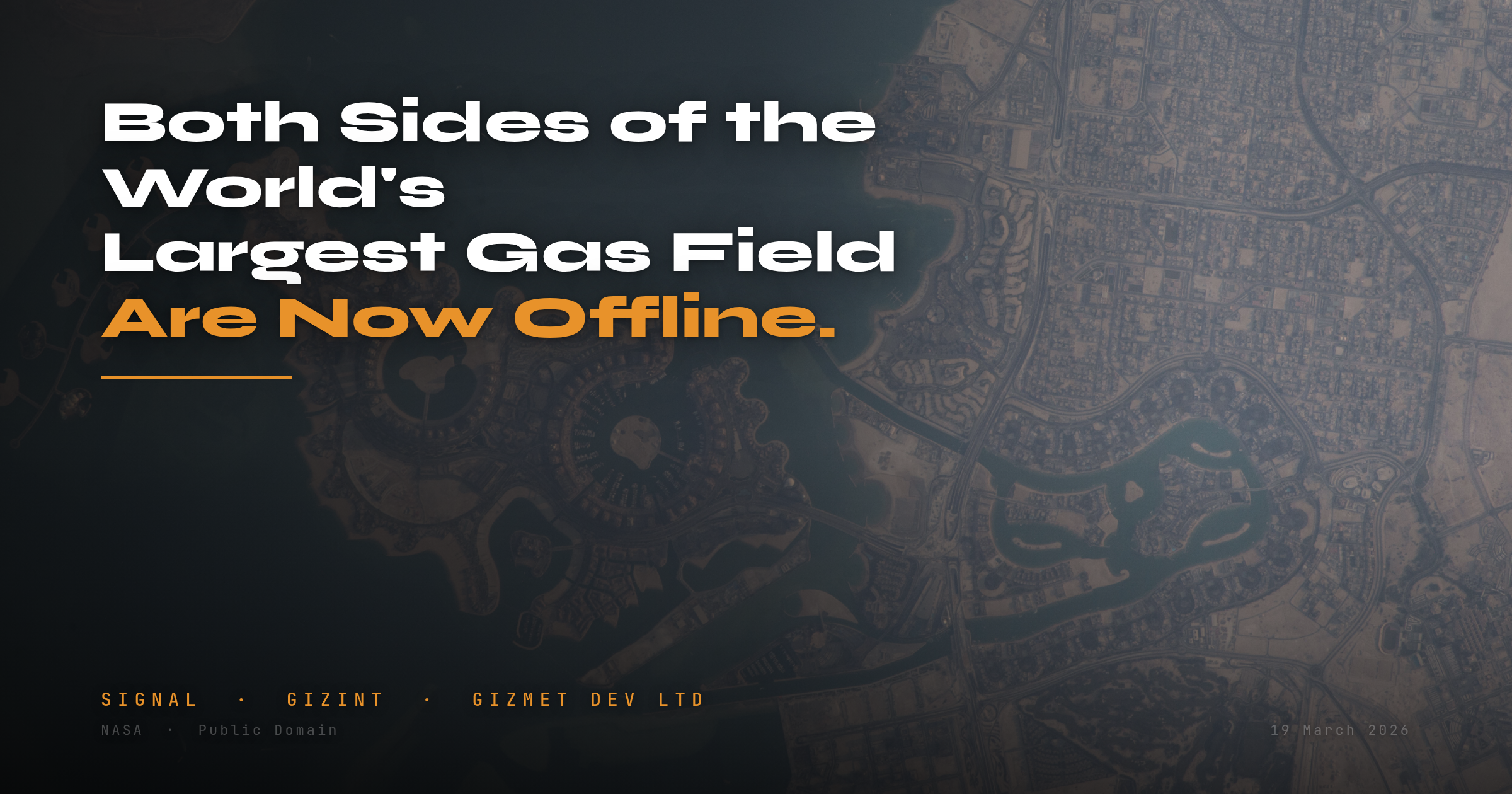
Both Sides of the World's Largest Gas Field Are Now Offline
South Pars and Qatar's North Field are the same geological formation — the world's largest gas reserve, split by a maritime border. On 18 March, Israel struck gas-processing facilities at Asaluyeh, the onshore hub of South Pars.
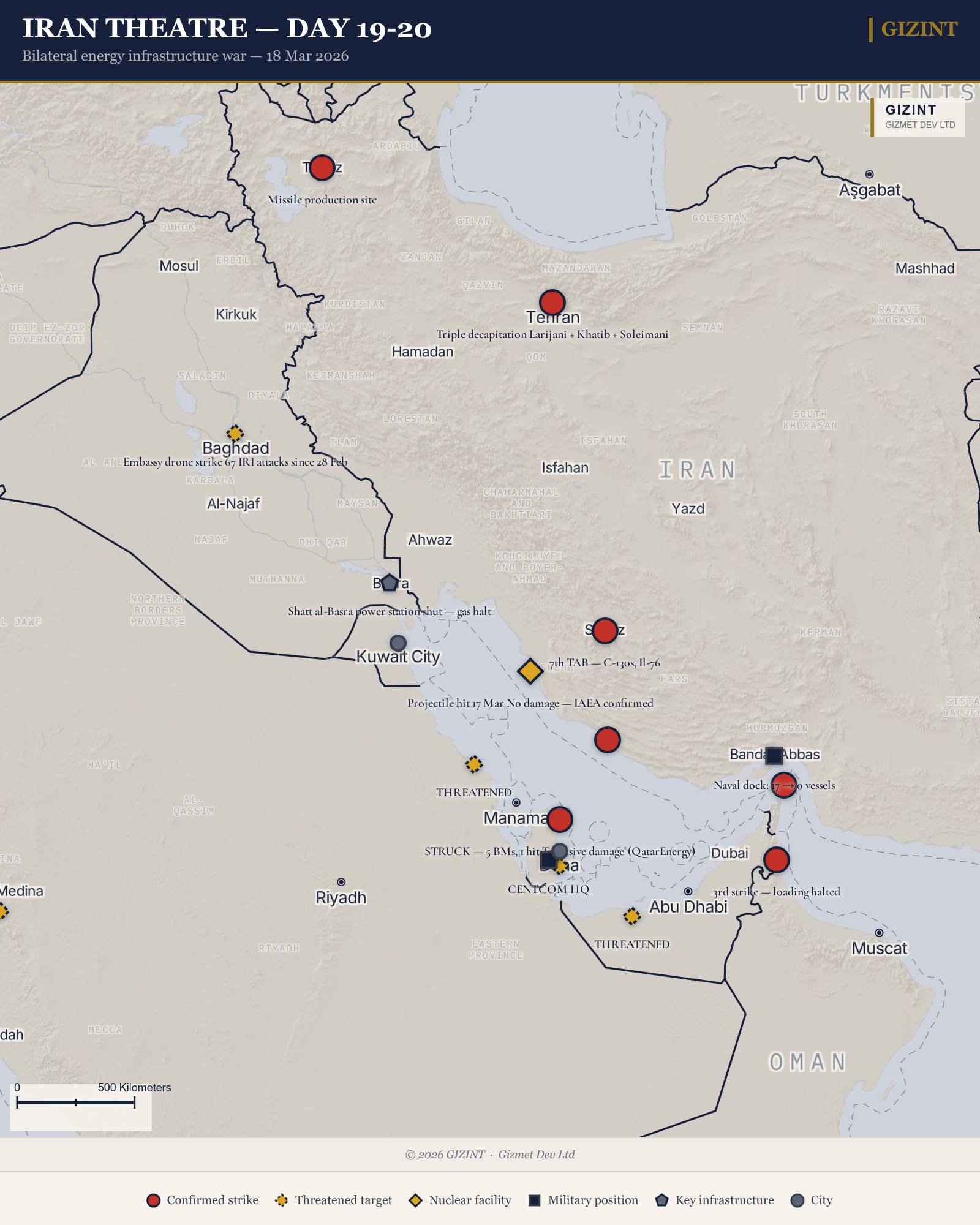
South Pars and Qatar's North Field are the same geological formation — the world's largest gas reserve, split by a maritime border. On 18 March, Israel struck gas-processing facilities at Asaluyeh, the onshore hub of South Pars. Hours later, five Iranian ballistic missiles hit Ras Laffan Industrial City on the Qatari side. Qatar intercepted four. One struck, causing what QatarEnergy described as "extensive damage."
Both sides of the same gas field are now offline simultaneously. Ras Laffan — approximately 25% of global LNG exports — has been shut since 2 March. QatarEnergy's CEO stated restart requires the conflict to end completely. South Pars gas processing is damaged. Iran halted gas exports to Iraq, removing 4,000-4,500MW from a power grid that US forces also depend on.
The strait is closed by insurance. The bypass is closed by strikes. Fujairah — the primary pipeline terminus that allows crude to bypass Hormuz entirely — halted loading on 18 March after a third consecutive attack on its export terminal. Saudi Arabia's Yanbu, on the Red Sea coast, is now the only functioning Gulf crude export path.
One pipeline. Every barrel.
The IRGC then named its next targets: SAMREF refinery and Jubail petrochemical complex in Saudi Arabia, Al Hosn gas field in the UAE, and Mesaieed petrochemical complex in Qatar. The statement framed these as "American shareholder" facilities — SAMREF is a Saudi Aramco-ExxonMobil joint venture. The GCC Extraordinary Ministerial Council invoked Article 51 collective self-defence for the first time.
Brent settled at $107.38. The IRGC stated attacks on energy infrastructure "will not stop until it is completely destroyed." The FOMC, which announced hours earlier, raised its inflation forecast to 2.7% and cited "uncertain" impacts from the conflict — the first Federal Reserve statement to reference the war.
The energy geography of the Gulf has been reduced to a single point of failure.
Sources: Iran Ministry of Petroleum via Bloomberg, 18 Mar; QatarEnergy/Qatar MoD/Reuters, 18 Mar; Bloomberg (Fujairah), 18 Mar; IRGC statement via Iranian state media, 18 Mar; Middle East Eye, 18 Mar; GCC Ministerial Council, 18 Mar; ICE Brent settlement, 18 Mar; Federal Reserve FOMC statement, 18 Mar; The National (Iraq gas), 18 Mar.
This is a free Signal from GIZINT. The full Daily Brief covers theatre maps, regional assessments, NARINT, financial analysis, and 200+ sources daily.
Every section. Nothing held back.