Gold Fell 7% During an Active War — Margin Calls Forced the Selling
COMEX gold fell 7.26% while four Gulf states absorbed Iranian strikes and the Pentagon requested $200B. The mechanism: margin calls forced liquidation of the most liquid non-cash asset.
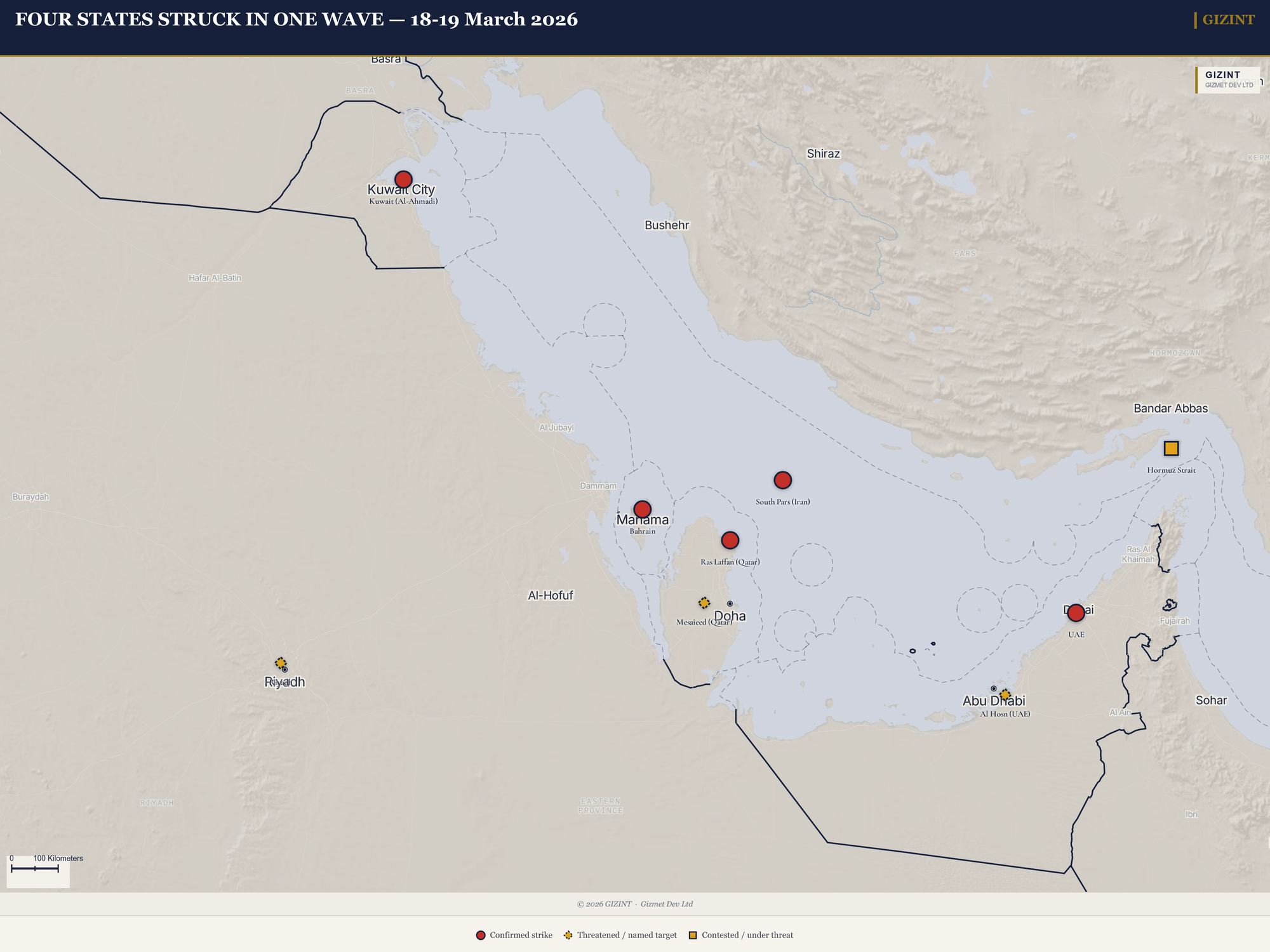
COMEX gold fell 7.26% on 19 March — from $4,896 to $4,540.70 — while four Gulf states absorbed simultaneous Iranian missile strikes, the Strait of Hormuz remained 95% blocked, and the Pentagon requested a $200B war supplemental. Gold is supposed to rise during conflict. It didn't.
The mechanism is not complicated. Equity losses triggered margin calls. Traders who needed cash sold their most liquid non-cash asset first. Gold is that asset. All three major US indices — S&P 500, Dow, Nasdaq — breached their 200-day moving averages simultaneously for the first time in 2026, closing at their lowest levels of the year. The selling was forced, not discretionary.
This is the third stage of a supply-shock stress sequence. Stage one: commodity prices spike (Brent touched $119 intraday). Stage two: equities cascade (S&P down 0.27%, VIX up 12.2% to 25.09). Stage three: safe-haven liquidation to meet cash requirements. The same pattern played out in March 2020 when gold fell 12% in eight trading days during the initial COVID shock — not because gold stopped being a safe haven, but because cash became more valuable than safety.
CDX high-yield credit spreads are surging toward 470 basis points — the widest since the pandemic. At 500bp, institutional investors begin forced de-risking. At 550bp, the Federal Reserve typically intervenes via emergency credit facilities. The threshold is approaching.
The central bank cluster completed with maximum policy divergence: the Fed held at 3.50-3.75% raising inflation forecasts, the Bank of England held unanimously with a hawkish tilt toward hikes, and the Bank of Japan held 8-1. All three cited energy-driven inflation from the conflict. No central bank is cutting into this.
Dubai crude closed at a record $166.96 (GME, 19 Mar). The Dubai-WTI spread exceeds $70 per barrel — a direct measure of the Hormuz blockade's impact on Asian buyers.
Gold's collapse is a liquidity signal, not a risk signal. The war didn't end. The cash ran out.
Sources: COMEX 19 Mar; NYSE/NASDAQ 19 Mar; CBOE 19 Mar; ICE 19 Mar; GME 19 Mar; BoE 19 Mar; BoJ 19 Mar; Federal Reserve 18 Mar; S&P Global Platts 19 Mar.
This is a free Signal from GIZINT. The full Daily Brief covers theatre maps, regional assessments, financial data, legal developments, cyber threats, and narrative intelligence.
Every section. Nothing held back.