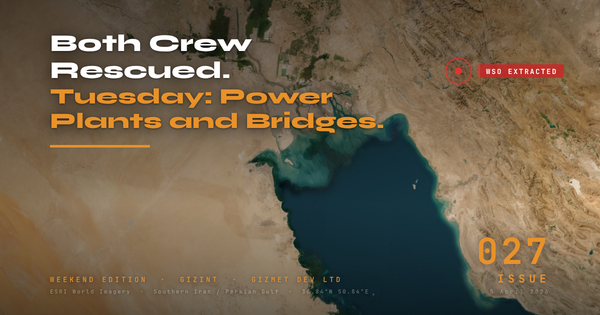
GIZINT — Weekend Edition | Issue 027
Both F-15E Strike Eagle crew members have been recovered from Iran after a combat search and rescue operation lasting approximately 36 hours (CENTCOM, 5 Apr).
Both F-15E Strike Eagle crew members have been recovered from Iran after a combat search and rescue operation lasting approximately 36 hours (CENTCOM, 5 Apr).
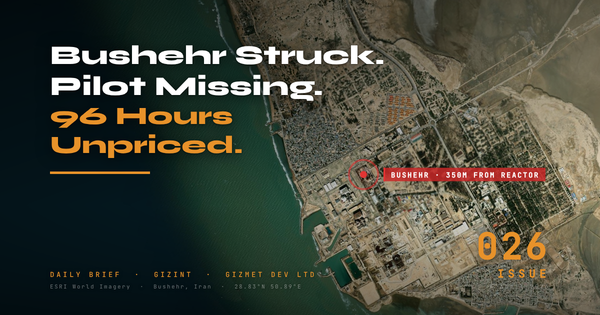
Bushehr struck 350 metres from the reactor. Pilot still missing. 96 hours of unpriced war collapses into Monday's opening bell. We assess Brent above $115 at the open.
Day 35. F-15E shot down over Iran; one pilot missing inside hostile territory. Abu Dhabi gas offline. Army chief fired mid-campaign. Three structural limits converge. Markets closed. Nothing priced in.
The air campaign has shifted to economic infrastructure because the military target ceiling is approaching. A third carrier group has deployed for a timeline measured in months, not weeks.
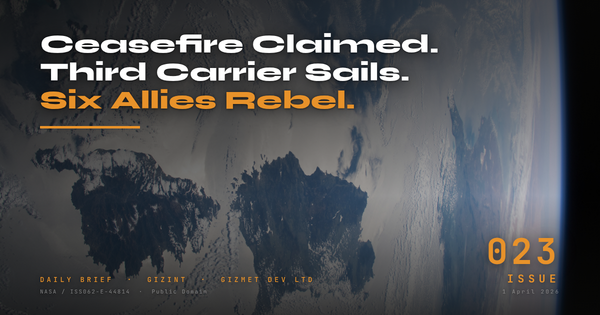
Trump claimed Iran requested a ceasefire while a third carrier strike group sailed for the Gulf and air strikes shifted to steel plants and pharmaceutical factories; we assess the force posture is built for months, not the "2-3 weeks" he promised tonight's national audience.
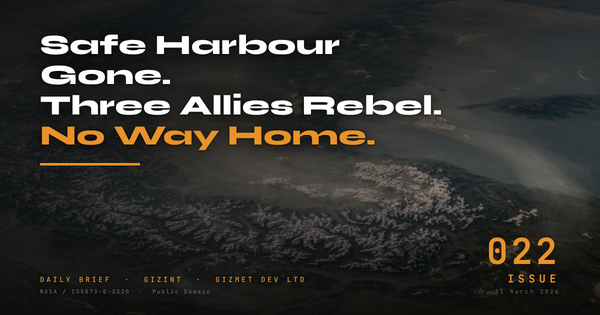
Iran struck a fully laden supertanker at anchor in Dubai's port, eliminating the last presumed safe harbour in the Gulf and pushing Brent above $117; the president responded by simultaneously threatening to seize Kharg Island and announcing a 20-tanker deal that Iran says does not exist.

We assess the gap between what the US has promised and what it can operationally deliver at Hormuz is now the defining feature of Day 31.
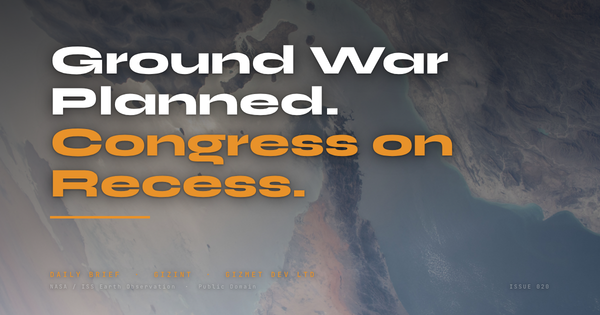
We assess the Iran campaign has reached an inflection point on Day 30: the Pentagon is preparing weeks of ground operations including Kharg Island seizure raids under zero congressional authorisation, while the Islamabad mechanism offers the first credible multilateral diplomatic framework but faces
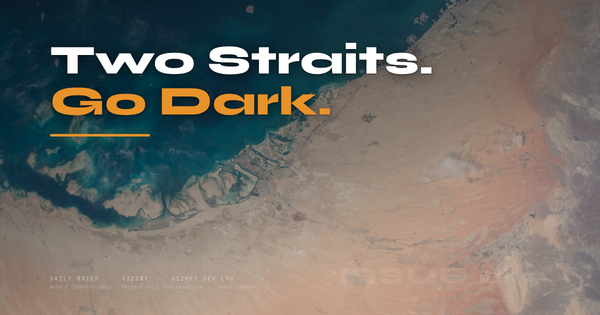
The campaign is consuming irreplaceable platforms faster than diplomacy can produce a framework: Iran struck a PSAB AWACS aircraft that has no production-line replacement, the Houthis opened a fifth front with the stated option to close a second chokepoint, and Iran's five counter-conditions are non
The Hormuz blockade survived the death of the man who built it and split into two systems that do not answer to each other: the IRGC turned back Chinese state-owned vessels hours after Iran's MFA promised China safe passage, while Malaysia transited the same Strait on the same day through a bilatera
Israel killed the officer who designed the Hormuz closure while Iran's parliament drafted legislation making the $2M toll permanent — the physical blockade now has a statutory author, not just an operational one.
Iran rejected the US ceasefire plan, issued five counterdemands including permanent Hormuz sovereignty, and threatened to seize the UAE and Bahrain coastline; we assess the conditions are designed to be rejected, establishing a negotiating floor while the 28 March convergence approaches in three day
Trump declared "this war has been won" and sent Iran a 15-point peace plan through Pakistan — while simultaneously deploying 3,000 troops from the 82nd Airborne and securing Saudi basing access.
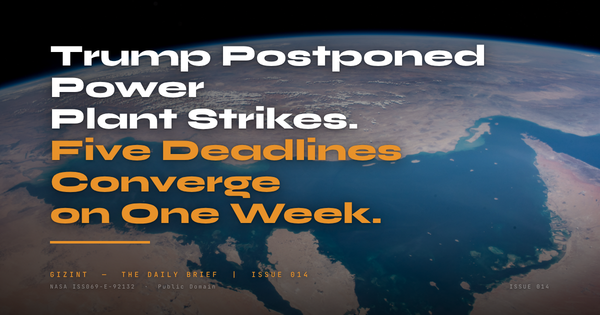
Trump postponed power plant strikes for five days. Iran denied all talks. Israel struck Tehran the same day. Five deadlines converge on one week — with Congress in recess.
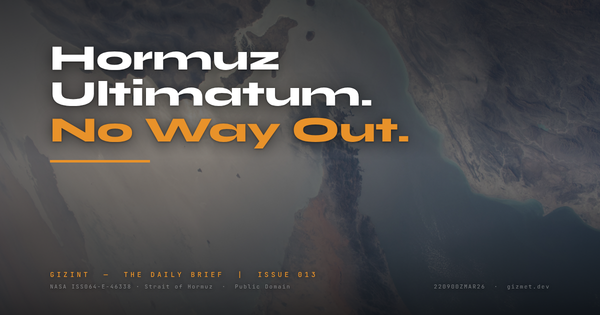
We assess the 48-hour Hormuz ultimatum — deadline ~23:44 UTC 23 March — creates a binary fork in which neither path de-escalates: compliance is inconsistent with every statement from Tehran, and infrastructure strikes would trigger full Hormuz closure, retaliatory Gulf energy attacks, and explicitly

We assess the Iran campaign's most consequential development is not the air war but the toll corridor — 90 vessels in 15 days, yuan payment, a G7 ally participating, and Iranian parliament legislating permanence.
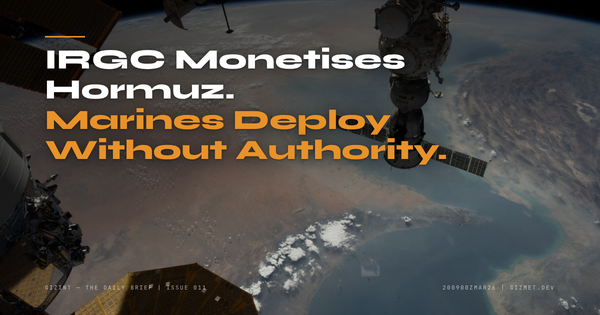
The IRGC has struck four of five announced energy targets and begun monetising the Hormuz blockade through a $2M-per-vessel toll corridor, while the Pentagon deployed 5,000 Marines with "ground option" language toward a war Congress has not authorised.
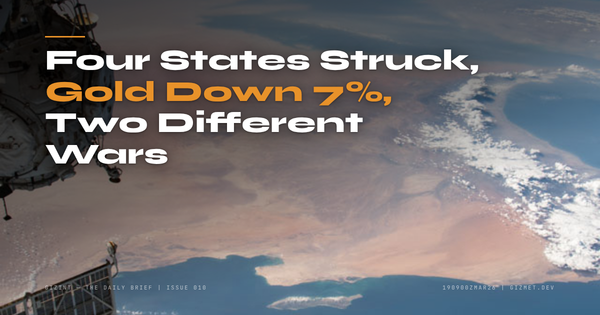
Iran struck four Gulf states simultaneously after Israel hit South Pars — the most significant bilateral energy war since the 1984-88 Tanker War. Washington and Jerusalem are not fighting the same war.
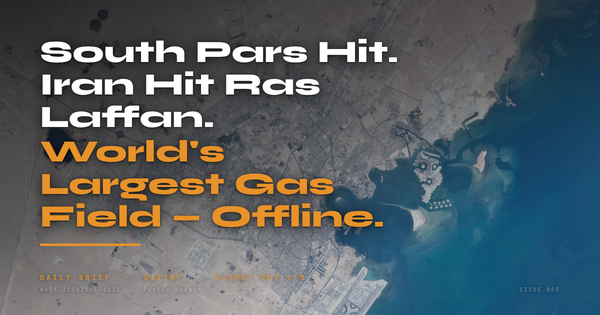
Israel struck South Pars on 18 March; hours later, Iran struck Ras Laffan causing extensive damage — both sides of the world's largest gas field are now offline.
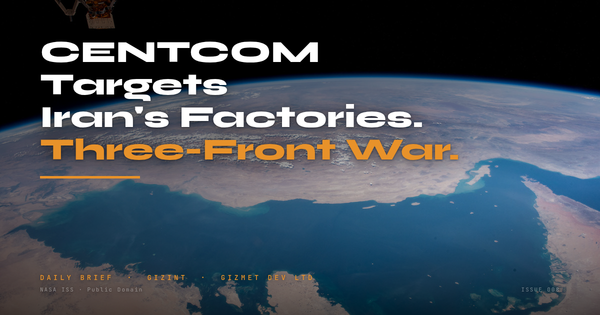
We assess the Iran campaign has entered its industrial-destruction phase — CENTCOM confirmed the shift from counterforce to defence industrial base targeting — while the claimed killing of the SNSC secretary and Basij commander would eliminate the diplomatic personnel required to end it.
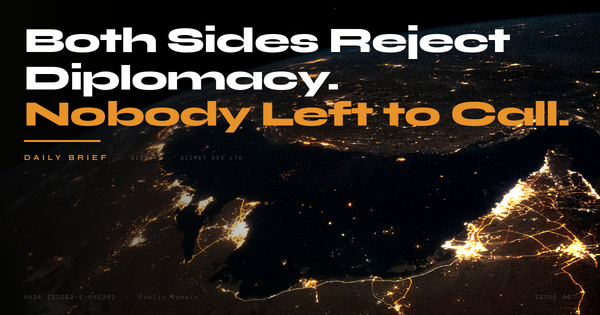
We assess military progress is measurable but political outcomes remain unconstrained — the campaign has degraded the majority of Iran's launch capacity while both belligerents have closed all visible paths to termination.
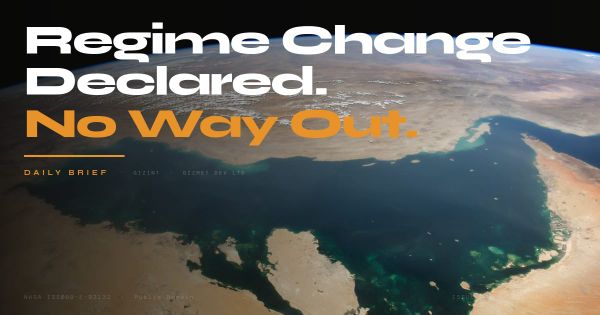
The campaign's stated objective — regime change — has no legal authorisation under Article II and no diplomatic endpoint by design.
Day 14: The Iran campaign has no identifiable ceasefire mechanism and is escalating. We assess the week of 17-23 March presents the highest convergence of military and financial risk since the campaign began.
NIC assesses regime change unlikely. JWLA-033 commercially closes Hormuz. All diplomatic channels collapsed. Trump-Putin call opens new vector.

Energy infrastructure exchange transforms campaign. Russia exploits two-theatre interceptor bind. Two-tier Strait emerges as parallel maritime order.
Same analytical engine. No jargon. Every crisis explained from the ground up. No corporate sponsors. No donors.
Get the Digest Read the opening dossier free →