

GIZINT — The Daily Brief | Issue 003
Energy infrastructure exchange transforms campaign. Russia exploits two-theatre interceptor bind. Two-tier Strait emerges as parallel maritime order.
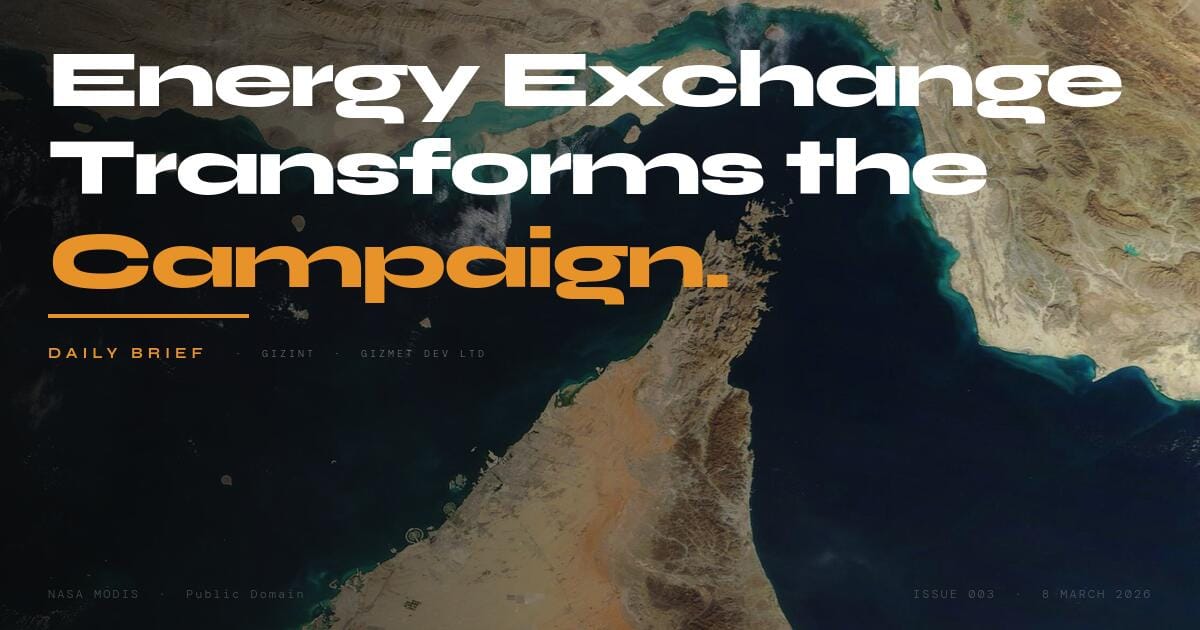
Both sides struck each other's oil infrastructure for the first time, transforming the military campaign into an energy war. We assess the parallel maritime order emerging at Hormuz — Chinese vessels transiting under bilateral terms while Western shipping remains insurance-blocked — represents the most significant challenge to the post-1945 maritime order since Suez 1956.
- Energy war begins: The Iran war crossed a new threshold on Day Nine as both sides struck each other's oil infrastructure for the first time — Israel hitting Tehran fuel depots, Iran retaliating against Haifa refinery with Kheibarshekan MRBMs — transforming a military campaign into an energy war with global market consequences.
- Two-theatre interceptor drain: Russia is deliberately exploiting the two-theatre munitions bind, increasing ballistic missile strikes against Ukraine to drain the same Patriot/PAC-3 interceptor stocks now consumed defending Gulf states — the two conflicts are connected through a finite supply of air defence munitions, not just competing for attention.
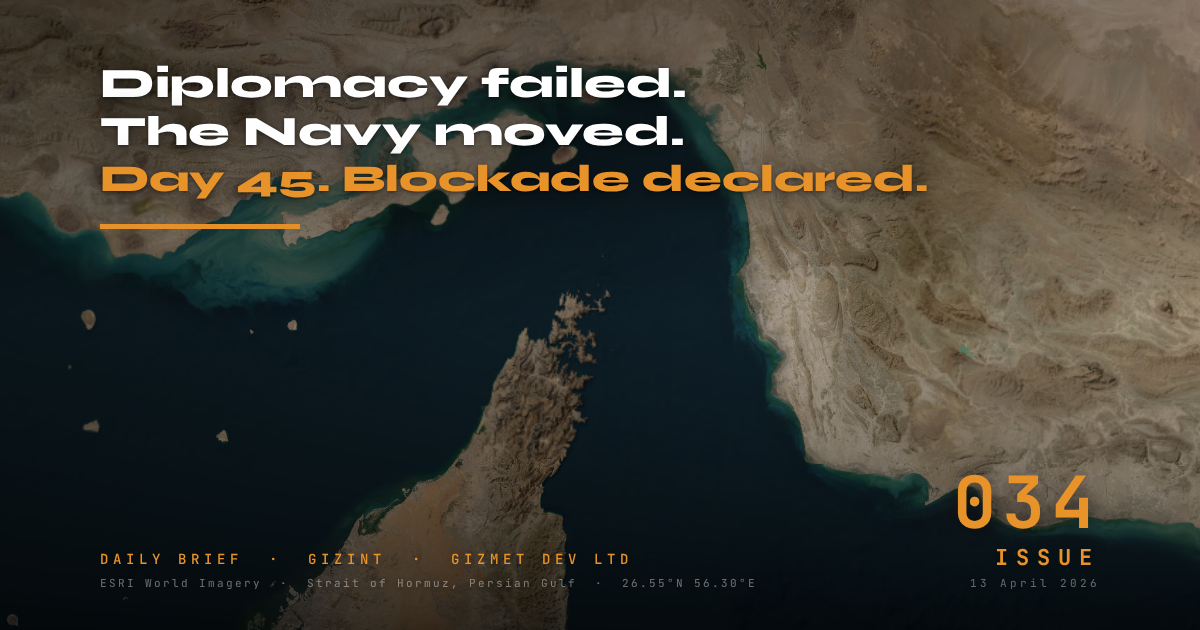
- Parallel maritime order emerging: The Strait of Hormuz is bifurcating into two parallel regimes: Chinese-flagged vessels are transiting under a bilateral safe passage deal with Iran while the rest of the world's shipping remains blocked by insurance withdrawal — if this holds, it is the most significant challenge to the post-1945 maritime order since Suez 1956.

PI-1: Day Nine Crosses the Energy Redline — Both Sides Strike Oil Infrastructure for the First Time
Both sides crossed a previously unbroken redline on Day Nine by targeting each other's oil facilities, transforming Operation Epic Fury from a military degradation campaign into an energy war with direct consequences for global oil supply.
The Israeli Air Force deployed over 80 fighter jets dropping 230 bombs on Tehran and central Iran on 7 March, striking fuel storage sites in Tehran for the first time — facilities the IDF stated distribute fuel "to various consumers, including military entities" (Times of Israel, 8 Mar). Oil depots in Tehran and Alborz provinces sustained large fires visible across the capital (Xinhua, 8 Mar). Within hours, the IRGC struck Israel's Haifa oil refinery with Kheibarshekan medium-range ballistic missiles, explicitly characterising the attack as retaliation for the Israeli oil infrastructure strikes (IRGC via Sepah News; Xinhua, 8 Mar). The Kheibarshekan is a solid-fuel MRBM with 1,450km range and a 550kg manoeuvrable warhead, capable of Mach 2-3 terminal velocity — one of Iran's most capable remaining weapons systems (Iran Watch; Euronews). Independent damage assessment at Haifa is not yet available.
This exchange creates a new escalatory dynamic. Both sides had previously treated energy infrastructure as off-limits. Israel's Tehran refinery strikes follow dual-use targeting logic under API Article 52(2): fuel distribution to military consumers is potentially lawful, but economic degradation is not. Iran's Haifa strike applies identical logic in reverse. The Lieber Institute (West Point) flags that both sides are now engaged in economic target sets that blur the military-civilian distinction (Legal desk assessment).
The operational context reinforces the escalation. IDF Chief of Staff LtGen Zamir states approximately 80% of Iran's air defence system is destroyed and 60% of ballistic missile launchers eliminated (Aviation Week, 5-6 Mar). The combined force struck two Artesh airbases in Esfahan Province on 7 March, extending air dominance into central Iran (Critical Threats Project / Institute for the Study of War [CTP-ISW], 7 Mar AM). Commercially available satellite imagery confirms at least nine of 23 Basij regional bases in Tehran struck as of 6 March, with three more hit on 7 March (CTP-ISW, 7 Mar AM). Six defence industrial sites were struck, including three under US sanctions (CTP-ISW, 7 Mar AM).
Iran continues retaliatory strikes despite President Pezeshkian's order to suspend attacks on neighbours. The IRGC struck Kuwait International Airport fuel storage tanks with Shahed drones, causing a massive fire (Kuwaiti Armed Forces; Anadolu Agency, 8 Mar). Dubai International Airport operations were briefly suspended after a drone interception near the airport (Euronews, 7 Mar). The UAE has now absorbed 221 ballistic missiles and 1,300+ drones since 28 February (UAE Defence Ministry). We assess the IRGC is the de facto authority on military operations — Pezeshkian's apology to Gulf neighbours on 7 March was retracted within hours under hardliner pressure, confirming the civilian government cannot control targeting decisions.
What changes if this assessment is wrong: If the energy infrastructure exchange is a one-off escalation rather than a new campaign phase, oil prices would stabilise and the conflict would revert to military-only targeting. The speed and symmetry of the exchange makes this unlikely — both sides demonstrated capability and willingness on the same day.
PI-2: Russia Exploits the Two-Theatre Bind — Ballistic Strikes Drain Shared Interceptor Supply
Russia is converting the Iran war into a material advantage in Ukraine by deliberately increasing ballistic missile strikes to exploit the finite US Patriot/PAC-3 interceptor supply now shared between two theatres.