
Iran Is Legislating, Negotiating, and Collecting Tolls at Hormuz Simultaneously.
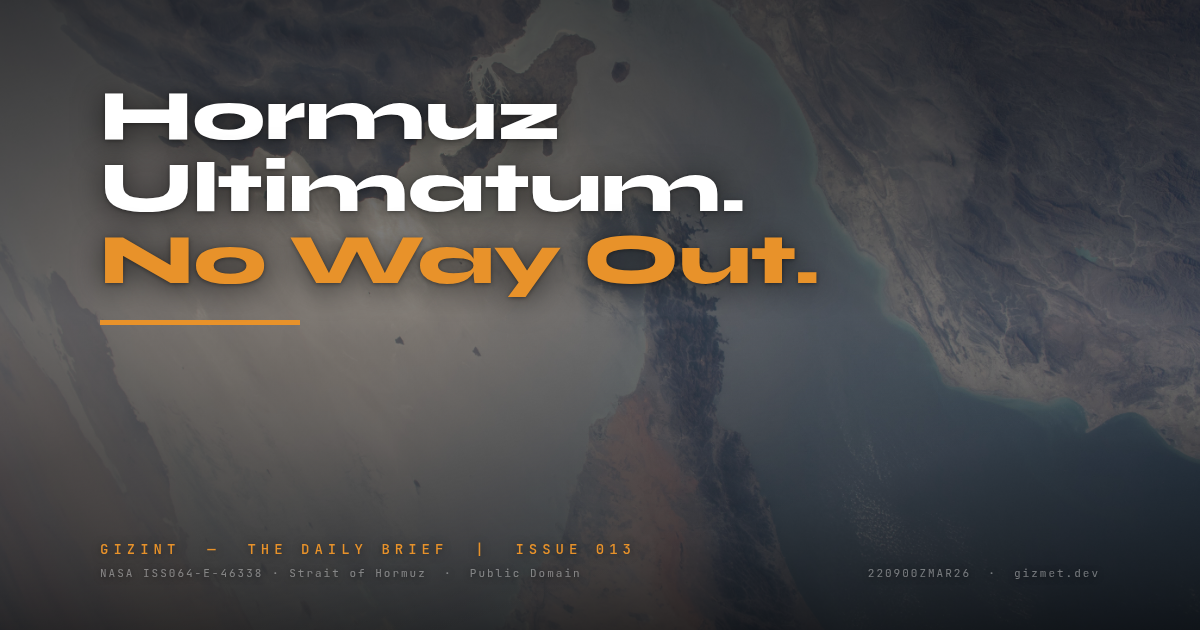
The last state to toll a natural international strait was Denmark, abolished in 1857. Iran is now legislating, negotiating, and collecting tolls at Hormuz on three tracks simultaneously. Oman has said nothing.
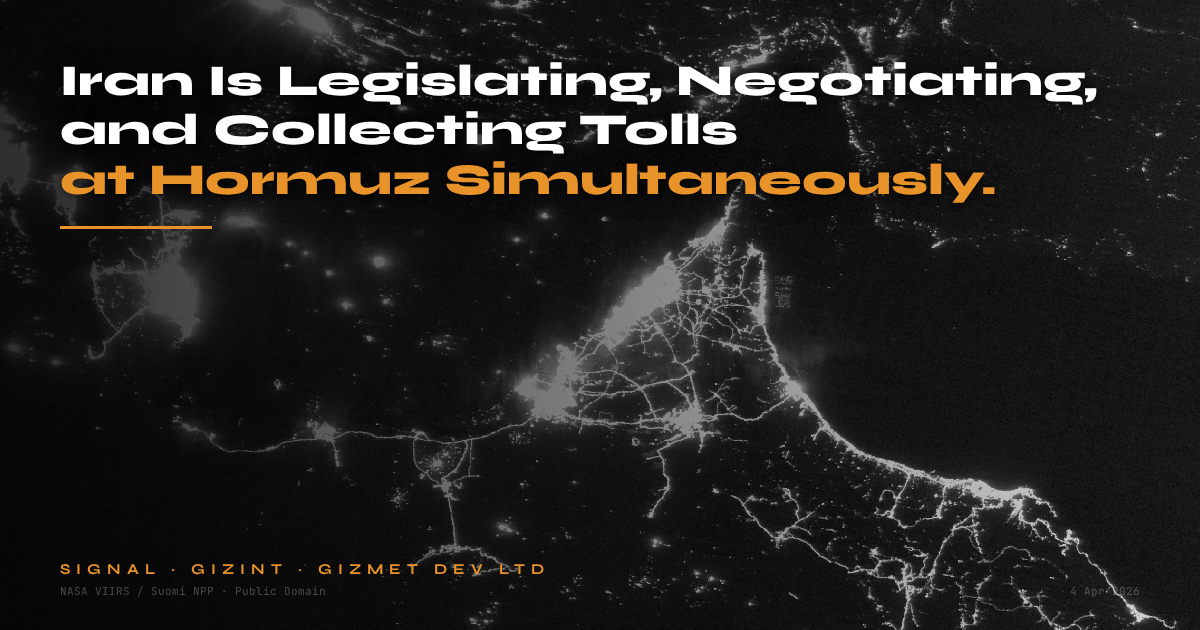
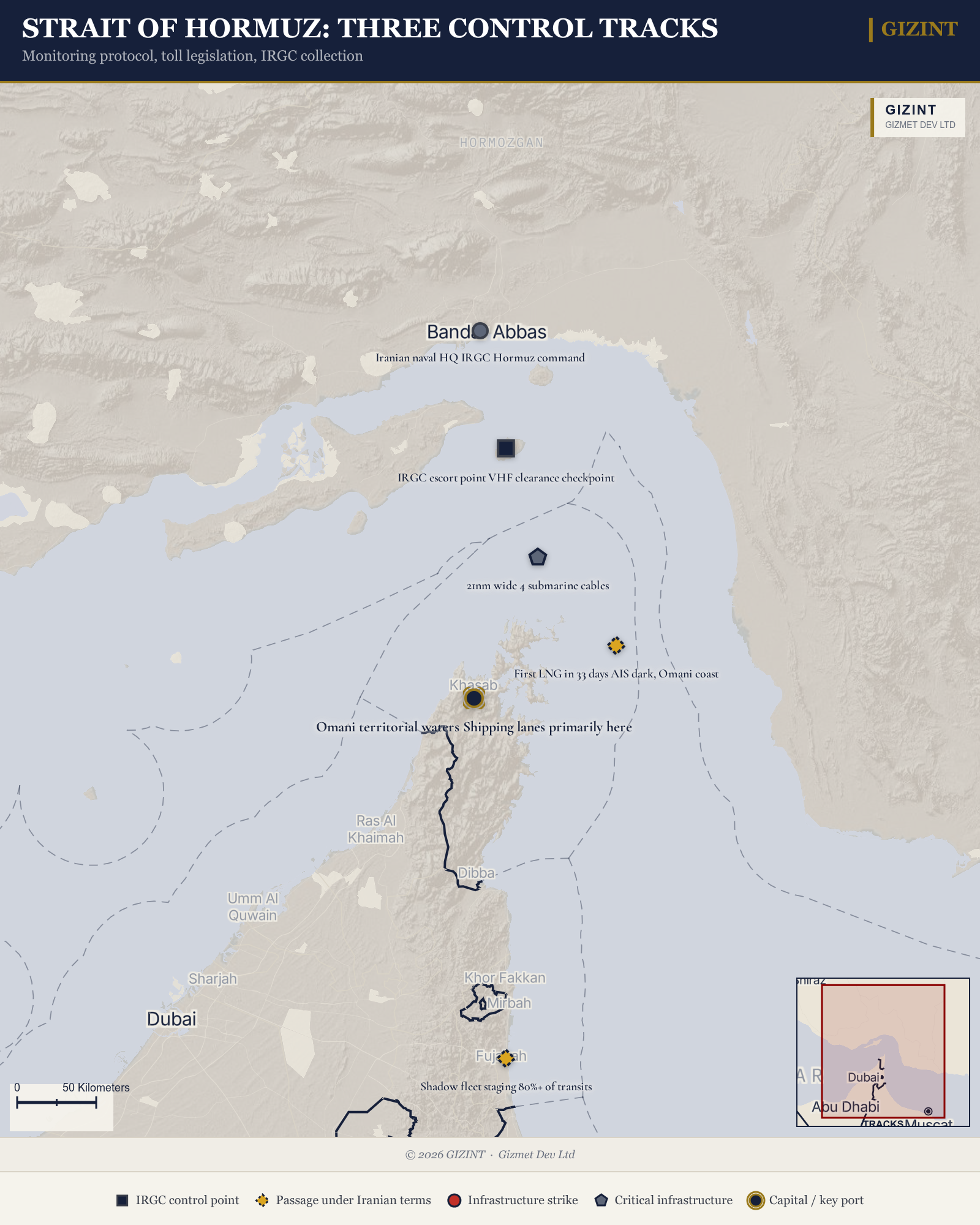
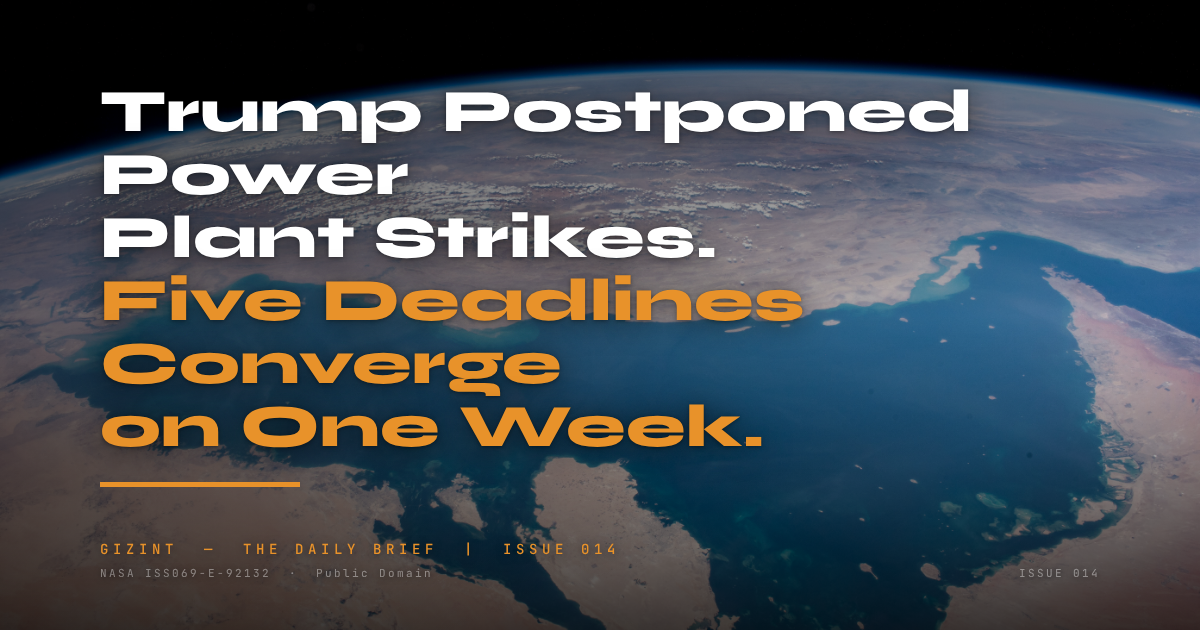
Iran is legislating, negotiating, and collecting tolls on Hormuz simultaneously, converting a wartime blockade into a bid for permanent governance while attention stays on the air campaign.
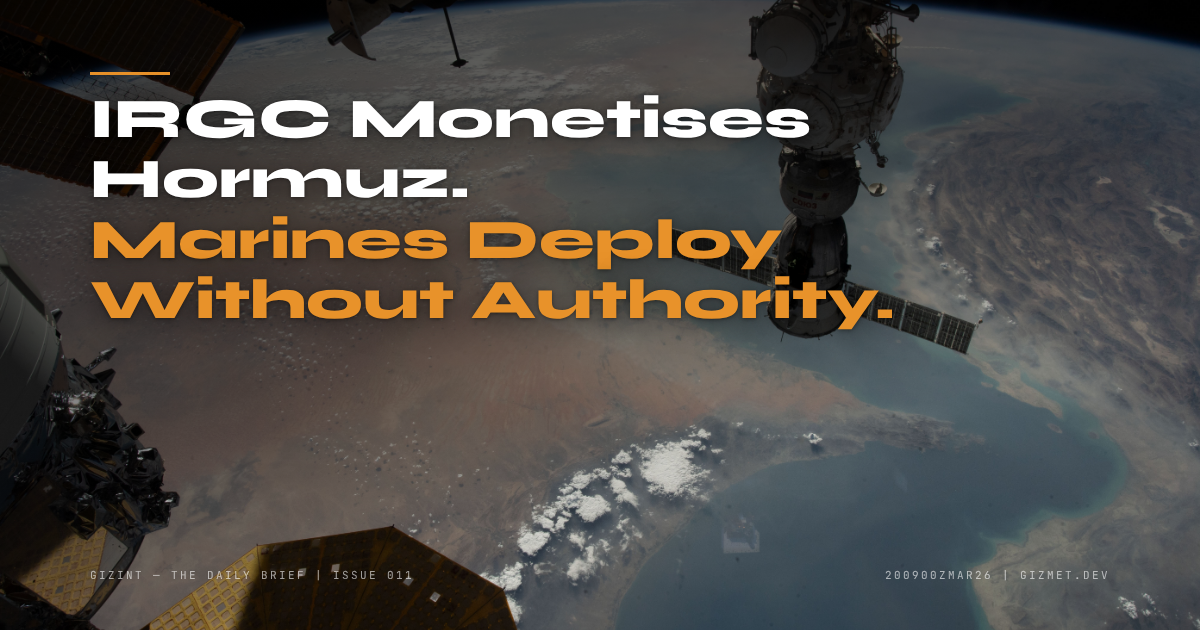
The IRGC is already operational: vessels are hailed over VHF for clearance codes and charged up to $2 million per transit in yuan or stablecoins (Lloyd's List; Bloomberg, 1 Apr 2026). The Majlis National Security and Foreign Policy Committee approved a toll bill on 30 March, pending plenary and Guardian Council votes, creating standing toll authority and banning vessels from sanctioning states (Anadolu Agency, 30 Mar; Bloomberg, 1 Apr 2026). Deputy FM Gharibabadi announced on 2 April that a monitoring protocol with Oman is "in its final stages," requiring advance permits for all vessels (IRNA, 2 Apr 2026).
Eleven countries hold passage terms: some negotiated, like the Philippines, granted toll-free transit on 2 April (The National, PNA, 2 Apr 2026); others unilaterally designated "non-hostile" by Tehran (Kyodo News, 31 Mar 2026). The toll corridor appeared in mid-March as wartime leverage. Legislation and a bilateral protocol are institution-building.
The last state to toll a natural strait was Denmark, abolished by the Copenhagen Convention of 1857. The ICJ established customary strait passage in 1949 (Corfu Channel, UK v. Albania), rejecting the claim that transit rights bind only treaty parties. The Montreux Convention, sometimes cited as precedent, is a multilateral treaty negotiated in peacetime; Iran's approach is unilateral, imposed during war, and restricts the commercial shipping Montreux protects.
Four submarine cables cross the strait; 17 systems serve the broader Gulf; the combined corridor carries roughly 30% of intercontinental internet traffic (TeleGeography, 2025). Alcatel declared force majeure on Gulf cables on 12 March (Rest of World, 12 Mar 2026). One repair vessel remains inside the Gulf, with no reinforcement possible through a controlled strait.
Oman's silence is the most significant signal. For three decades Muscat has facilitated every major Iran-West opening, including the JCPOA back-channel (NPR, 27 Feb 2026). Silence during negotiation is Oman's norm, but Muscat has not confirmed or denied the protocol. From the strait's southern shore: consulted, coerced, or presented with a fait accompli?
Full assessment in today's Daily Brief: Issue 025. Today's brief covers the F-15E shootdown assessment over Iranian airspace, Gulf interceptor sustainability calculations, and the 72-hour market data gap reshaping war-risk premiums.
This is a free Signal from GIZINT.
The full Daily Brief covers theatre maps, regional assessments, financial data, legal developments, cyber threats, and narrative intelligence.
Every section. Nothing held back.