Houthis Enter the War — Two Straits Under Threat
Yemen's Houthis fired ballistic missiles at southern Israel on 28 March, their first strike on Israeli territory since the US-Israel campaign against Iran began a month ago (Al Masirah TV [Houthi-run], 28 Mar; IDF, 28 Mar). The IDF confirmed intercepting one missile. Sirens sounded across Beersheba.
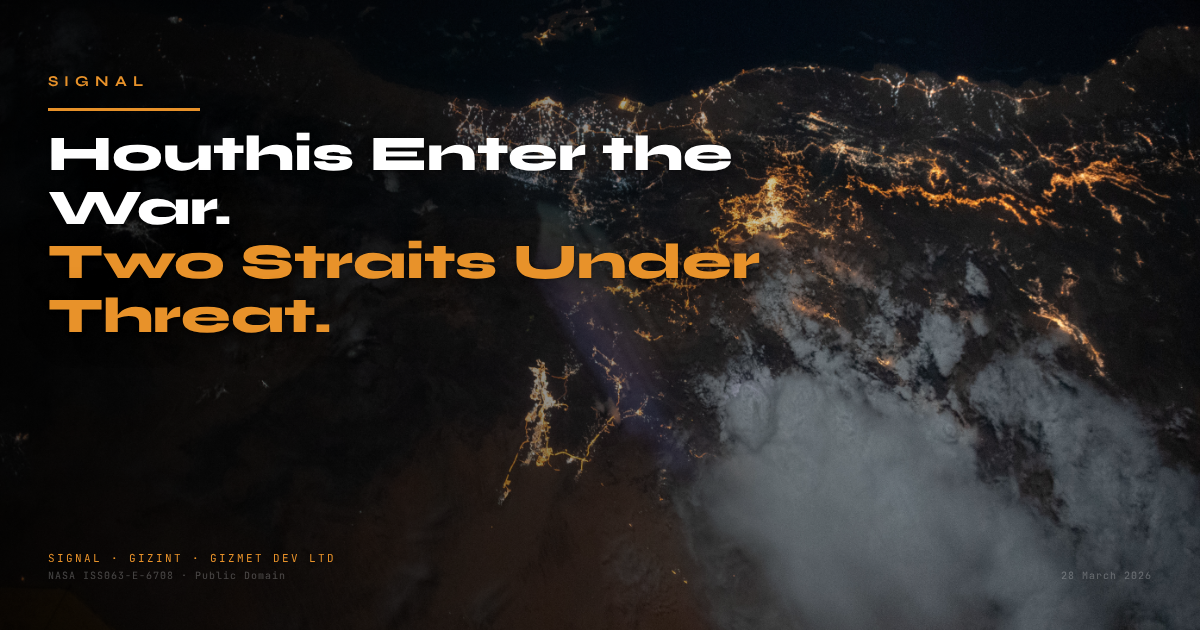
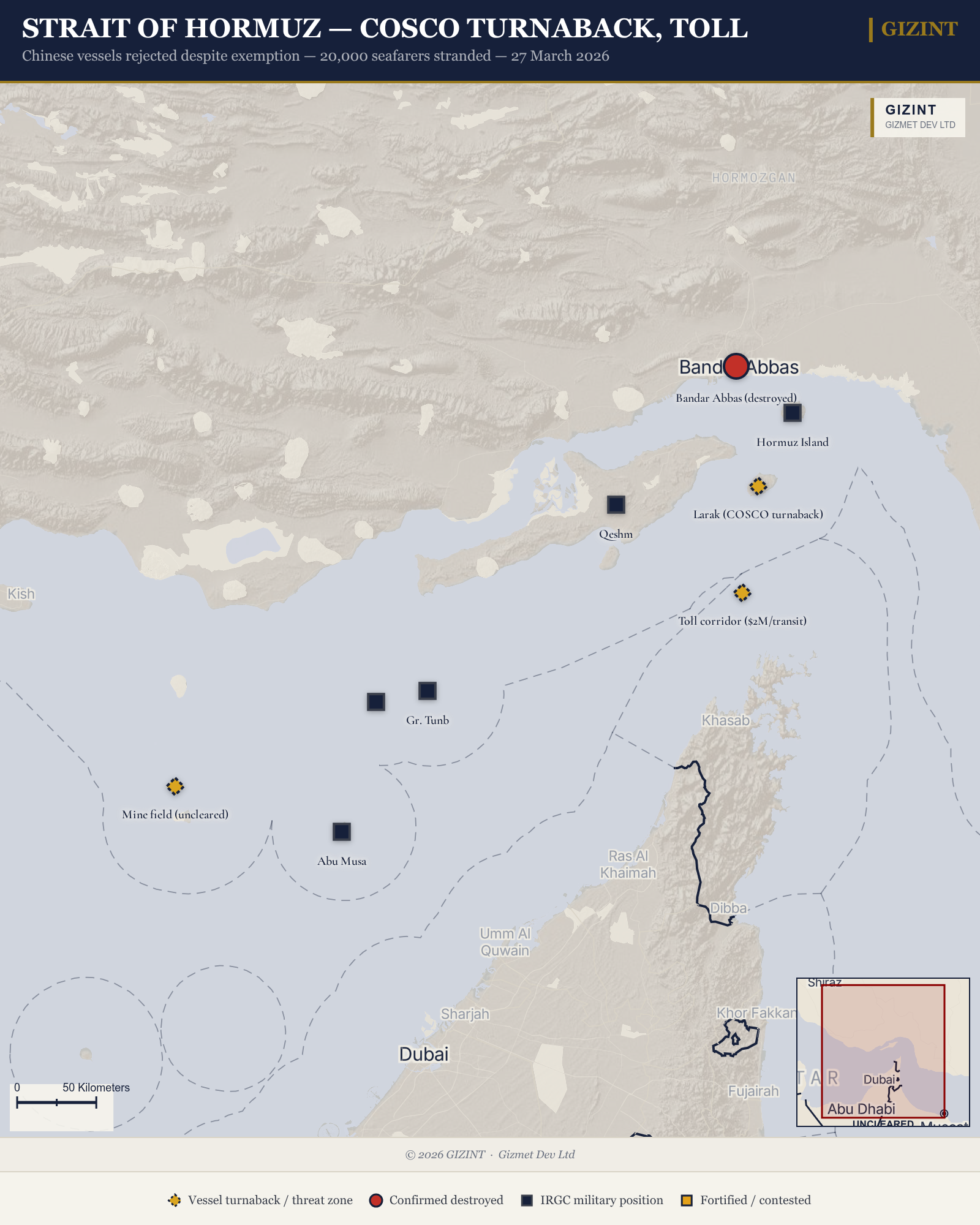
Yemen's Houthis fired ballistic missiles at southern Israel on 28 March, their first strike on Israeli territory since the US-Israel campaign against Iran began a month ago (Al Masirah TV [Houthi-run], 28 Mar; IDF, 28 Mar). The IDF confirmed intercepting one missile. Sirens sounded across Beersheba. No casualties reported.
The attack ends a month of restraint. On 7 March, Houthi leadership declined to join the conflict, reportedly aligning with Tehran's preference to hold them in reserve (Al Jazeera, 7 Mar). The Houthis also have independent incentives; striking Israel is popular domestically and across the region. The sequence over 72 hours suggests what shifted the calculus: Israel killed IRGC Navy chief Tangsiri in Bandar Abbas (IDF, 26 Mar), then struck Iran's Arak reactor and Ardakan yellowcake plant (IDF, 27 Mar). Saree declared "our fingers are on the trigger" (Al Masirah [Houthi-run], 27 Mar). The missiles followed the next morning.
The Houthis struck Israel, not shipping. That distinction matters, but their statements signal what comes next. Deputy Information Minister Mansour stated "closing the Bab al-Mandeb strait is among our options" (Al Jazeera, 28 Mar). From late 2023 to 2025, the Houthis targeted 100+ vessels from 60+ countries, diverted 60% of commercial shipping, and sank four using weapons not previously deployed in naval combat (Soufan Center, 19 Mar; Washington Institute). Bab el-Mandeb was already under strain; containership Suez transits fell 33% in the two weeks to 22 March (Drewry, 22 Mar).
Today’s brief covers the AWACS strike that removed an irreplaceable platform, the negotiating contradiction exposed by Israeli ministers, and assessments across Iran, Lebanon, Ukraine, and the GCC. Continue reading →
The geometry is the problem. Hormuz carries roughly 20 million barrels of oil per day (EIA). Bab el-Mandeb carries roughly 9 million (EIA, 2023 data); much of it originates in the Gulf and already transited Hormuz. Oil sits above $110 per barrel (ICE Brent, 28 Mar). No pipeline alternative can absorb the volumes.
The open question is not whether the Houthis will target shipping; their leadership has said they will. It is whether a non-state actor can credibly hold a second chokepoint while a coordinating state holds the first. The 2023-2025 campaign demonstrated Houthi capability at one strait; the 1980s Tanker War involved nation-states at one strait. No close parallel exists for this dual-chokepoint configuration.
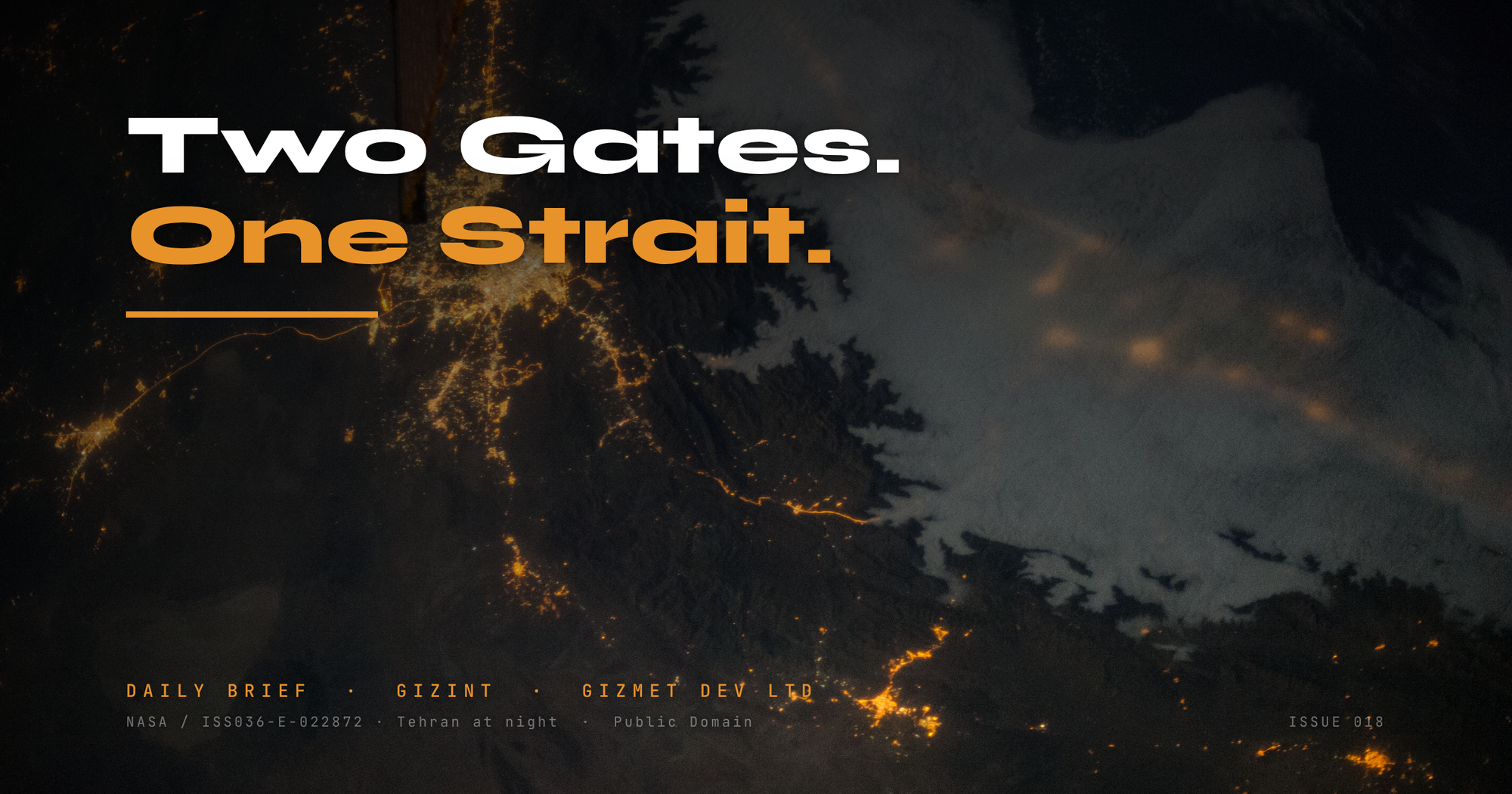
Full assessment in today's Daily Brief: Issue 018.
This is a free Signal from GIZINT.
The full Daily Brief covers theatre maps, regional assessments, financial data, legal developments, cyber threats, and narrative intelligence.
Every section. Nothing held back.