























The Navy Scrapped Its Minesweepers. Now It's Rushing Them Back.
In September 2025, the US Navy decommissioned the last of its dedicated Avenger-class minesweepers from Bahrain ([USNI News, 25 Sep 2025](https://news.usni.org/2025/09/25/last-u-s-avenger-mine-countermeasure-ship-in-middle-east-decommissions)). Weeks earlier, the MH-53E Sea Dragon airborne MCM detac

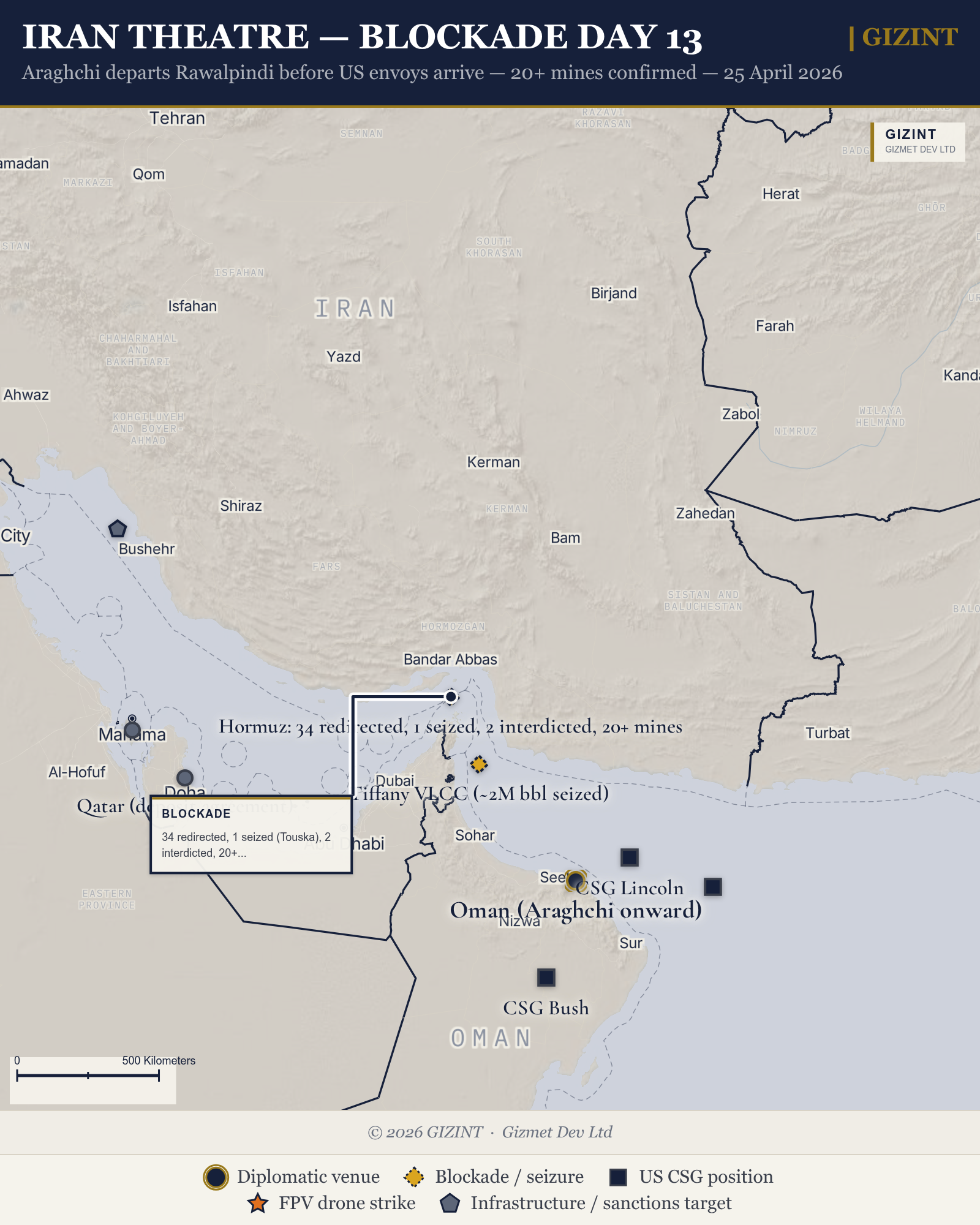
In September 2025, the US Navy decommissioned the last of its dedicated Avenger-class minesweepers from Bahrain (USNI News, 25 Sep 2025). Weeks earlier, the MH-53E Sea Dragon airborne MCM detachment had flown its last mission. In January, the Navy loaded the Avengers onto the heavy-lift M/V Seaway Hawk and shipped them for scrapping. Two months later, Iran mined the Strait of Hormuz. The Navy cleared Iranian mines from these waters before, in Earnest Will (1987-88) and Kuwait (1991); the Avenger class earned its reputation in those operations.
US intelligence assesses Iran has placed at least a dozen Maham-3 and Maham-7 naval mines, from a stockpile that also fields EM-52 rising mines (CBS News, 23 Mar 2026; ONI, Iran's Naval Forces, 2017). Modern smart mines reject simple sweep signatures and demand hunt-and-neutralize; the Avengers were built to do both.
The Littoral Combat Ship programme meant to replace them carries a projected $60+ billion lifetime operate-and-support bill (GAO-22-105387). In March 2026, the Pentagon's test office reported the Navy had "not provided sufficient data... to determine operational effectiveness" of the Independence-variant MCM package, with no FY2025 operational tests (DOT&E FY2025 Annual Report).
The Navy is now rushing two Avenger-class minesweepers from the Pacific Fleet, the same class retired from Bahrain roughly seven months earlier (Stars and Stripes, 16 Apr 2026). Chief of Naval Operations Daryl Caudle called the LCS package "very, very good," then noted "a bit of irony there on the timing" of retiring ships "built specifically to do that mission" (CSIS, 31 Mar 2026).
On 22 April, the Pentagon briefed Congress clearance could take six months after the war ends (Washington Post, 22 Apr). Hours later, Pentagon spokesperson Sean Parnell publicly disputed the reporting, calling it "dishonest journalism" and an "impossibility" (Times of Israel, 23 Apr). The closed-door figure and the public denial cannot both be operationally accurate; the 1991 Kuwait clearance took over six months to neutralise roughly 1,157 mines under near-ideal conditions, suggesting the longer figure is the more defensible planning assumption.
QatarEnergy's 24 March force majeure took 12.8 million tonnes of LNG offline for three to five years, $20 billion in lost annual revenue (Al Jazeera, 24 Mar 2026). Iran laid more mines during the ceasefire (Axios, 23 Apr) and, reporting indicates, did not record all placements (NYT, 11 Apr, via JPost). Insurance certification cannot rest on a chart neither side trusts.
London insurers extended the Gulf high-risk listing under JWLA-033 (LMA Joint War Committee, 3 Mar 2026). Insurers are quoting $10-14 million to cover a single VLCC transit (Lloyd's List, Mar 2026). Tanker traffic has fallen from a pre-war baseline of 138 daily transits to fewer than 20 (UANI, 15 Apr). Beazley announced a $1 billion marine war consortium treating Hormuz as a permanent risk class (Insurance Journal, 17 Apr).
A signature changes the politics. It does not move the mines. It does not convince Lloyd's.
Full assessment in the latest Daily Brief: Issue 047. This week's coverage includes the 1991 Kuwait clearance precedent, why mine-laying invokes the ICJ's strongest Article 51 ground under Nicaragua v. United States, and the insurance market that has already priced Hormuz as permanent risk.
This is a free Signal from GIZINT.